
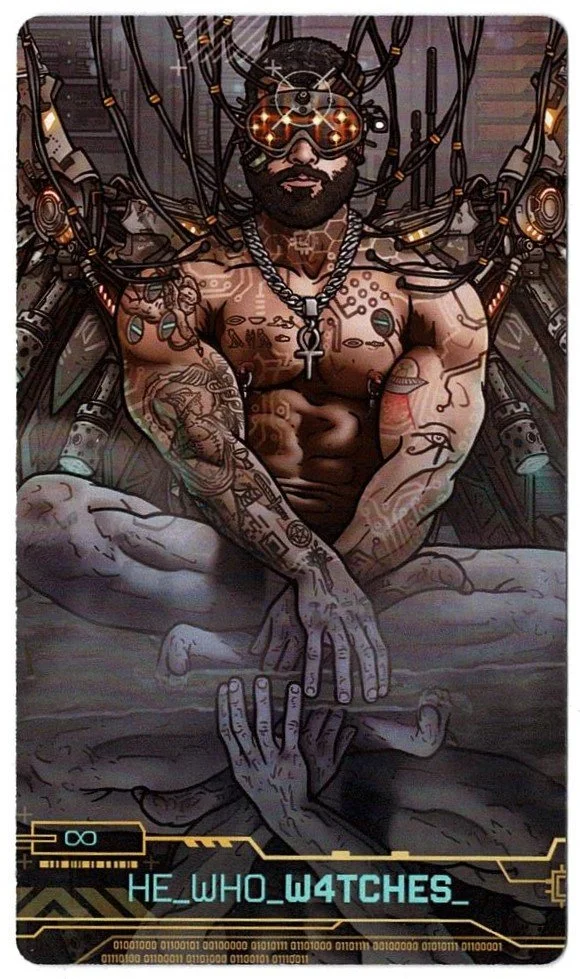
Arcana
Tarot cards are integrated into The Wayspace System as a hand of "Fate"—a tangible resource players hold that allows them to bend the laws of probability and narrative.
You play cards to change the story.
Every participant (player and gamemaster) can play a card at any time, and have its effect take place. Some cards (Major Arcana) are a World Effect, and the gamemaster must agree to the resolution of each World effect card. If a GM cannot agree to a played Arcana card, then the player receives a Luck point and a new card.
The Hand of Fate
At the start of every session, shuffle a standard 78-card Tarot Deck. Each participant in the game draws three cards. They keep these cards hidden in their hand (or face down on the table).
Max Hand Size: You can never hold more than 3 cards at a time.
Regaining Cards: You draw a new Minor Arcana card when you spend your current one, AND you ensure the cards effect has been added to the narrative of the game story in an engaging way. Otherwise the GM may deny an Arcana effect, allowing the player a new card draw.
The Minor Arcana
The Minor Arcana correspond to the four Attribute Blocks (Fire, Earth, Air, Water). You can play a card from your hand after you roll the d20, but before the GM declares the outcome.
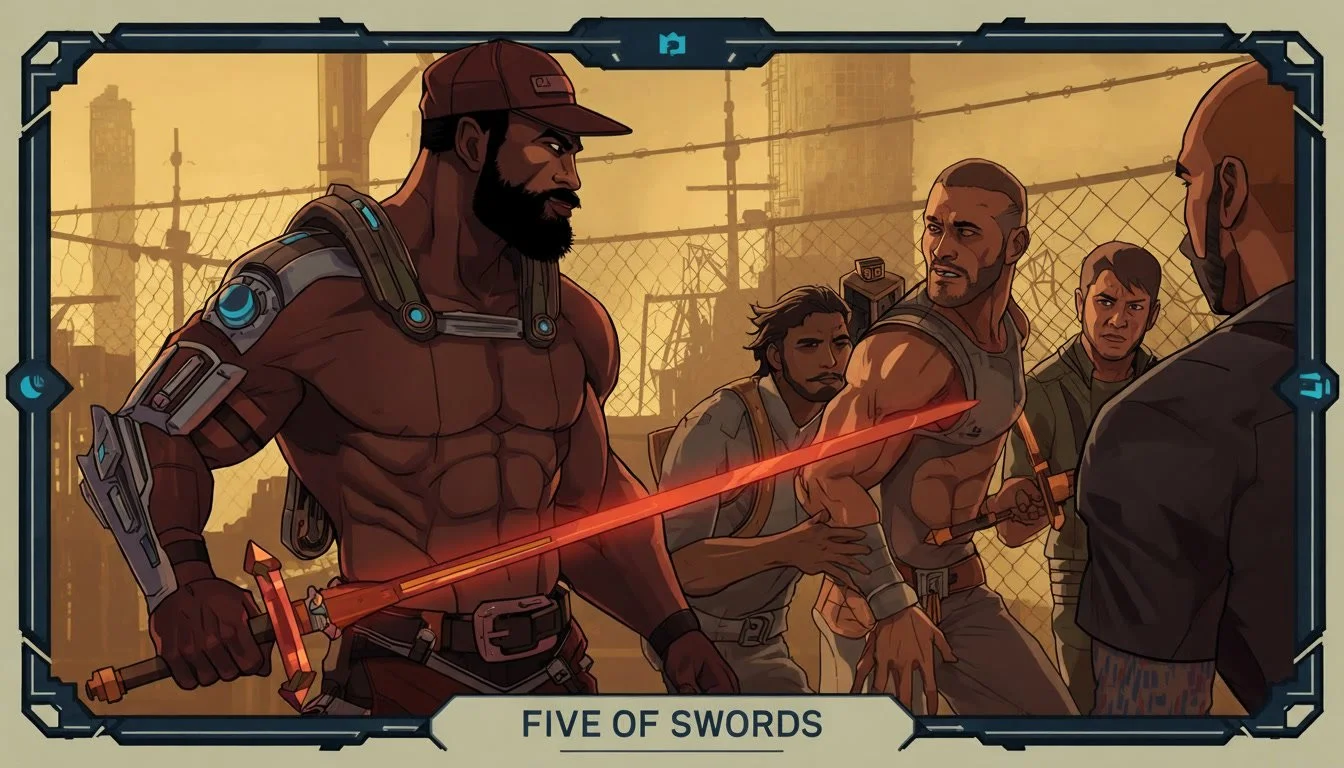
-
Element: Fire
Attributes: Force, Focus, Presence
Theme: Action, passion, Damage
-
Describe a sudden burst of inspiration or an explosive start. "I don't just shoot; I fan the hammer."
-
Describe how you are planning for the next step while doing this one. "I hit him high, looking for the gap to open up low."
-
Describe how you use the environment or a tool in a new way. "I kick the brazier over to create a wall of fire."
-
Describe how you are showing off for an ally. "I yell 'Watch this!' to the Rookie before I swing."
-
Describe the action as chaotic, messy, or desperate. "It's not pretty; we're just rolling in the dirt, throwing punches."
-
Describe the action with arrogance or flair. "I don't even look as the explosion goes off behind me."
-
Describe how you are acting despite being overwhelmed/outnumbered. "They are all around me, so I have plenty of targets."
-
Describe the action as a blur of motion; speed over accuracy. "I'm moving so fast my afterimage is still standing there."
-
Describe a wound or injury that you are ignoring to make this move. "My arm is broken, but I hold the sword with my teeth."
-
Describe how much effort this is costing you. "I put every last ounce of stamina into this heave."
-
Element: Earth
Attributes: Frame, Method, Discipline
Theme: Material, Body, Endurance, Wealth.
-
Describe a tangible resource you are investing (ammo, money, a distinct item). "I load the expensive, armor-piercing round."
-
Describe how you are multitasking or balancing two priorities. "I hold the door shut with my shoulder while I patch the wound."
-
Describe the technical skill or training involved. "I apply the leverage exactly where the structural weakness is."
-
Describe how you hold your ground or block. "I plant my feet like roots; nothing moves me."
-
Describe the action coming from a place of scarcity or lack. "I only have one shot left, I can't miss."
-
Describe how you are helping someone else with this action. "I take the hit so the Physician can get to the patient."
-
Describe a pause, a breath, or a delay before the strike. "I wait... and wait... until he blinks."
-
Describe the repetitive, drilled nature of the action. "Just like in boot camp. Field strip, clear jam, fire."
-
Describe the quality of your gear or self-sufficiency. "My armor was forged for exactly this kind of punishment."
-
Describe an overwhelming use of resources or "overkill." "I don't just kill it; I empty the magazine."
Step 1: The Pip Cards (Numbered 1–10)
When you play a numbered card, you apply a mechanical bonus to a d20 roll.
Same Suit Bonus: If the card's suit matches the Attribute you are rolling (e.g., Playing a Wand on a Force check), you add +5 to the result.
Off-Suit Bonus: If the suit does not match, you add +2 to the result.
The Ace: The Ace counts as a Natural 20 on the die, regardless of what you actually rolled.
Step 2: The Directorial Cue
To integrate roleplay into the Pip Cards (Minor Arcana 1–10), we treat every card played not just as a math bonus (+2/+5), but as a Directorial Cue. They create Narrative Effects. You can play them at any time (Reaction, Action, or Interruption).
You cannot simply say, "I play the 5 of Wands to hit." You must narrate the action according to the card's Provocation - the descriptive associated with the card. If you do not satisfy the Provocation, the GM can deny the bonus.
-
Element: Air
Attributes: Agility, Intellect, Insight
Theme: Logic, Mind, Truth, Cruelty
-
Describe a moment of absolute clarity or realization. "Suddenly, I see the pattern in his attacks."
-
Describe a moment of stillness or a refusal to react emotionally. "I empty my mind. I am the eye of the storm."
-
Describe the action as a necessary evil or causing you regret. "I'm sorry, friend, but you're in my way."
-
Describe retreating or disengaging to gain advantage. "I slide back into the shadows to reassess."
-
Describe winning through an underhanded or "dishonorable" tactic. "I throw sand in his eyes before I stab."
-
Describe the trajectory, math, or physics of the move. "I bank the shot off the steel girder at a 45-degree angle."
-
Describe a risky plan that shouldn't work, but might. "This is stupid, but I'm going to try to hack it mid-combat."
-
Describe acting despite being trapped or cornered. "Back against the wall, I lash out."
-
Describe the psychological impact on the target. "I whisper his mother's name as I twist the knife."
-
Describe a "finishing move" intent. "I am not trying to wound; I am trying to delete."
-
Element: Water
Attributes: Warding, Guile, Instinct
Theme: Emotion, Intuition, Relationships, Magic
-
Describe a surge of magical energy or gut instinct. "I don't aim; I just feel where he's going to be."
-
Describe a connection to an ally or an enemy. "I catch my partner's eye and we move in sync."
-
Describe the action as fluid, dance-like, or celebratory. "I laugh as I vault over the railing."
-
Describe a detachment or boredom with the danger. "I yawn while dodging the arrow."
-
Describe how a past failure motivates this action. "I won't let what happened to Sarah happen to you."
-
Describe a flashback or memory triggered by the scene. "This reminds me of that summer in the Archipelago."
-
Describe a feint, a trick, or a distraction. "I make him think I'm going left, but I'm already gone."
-
Describe leaving something behind (cover, safety) to act. "I drop my shield to two-hand the weapon."
-
Describe a stroke of pure luck or coincidence. "I slip, which accidentally ducks the punch."
-
Describe fighting for a cause, a family, or a safe place. "Not here. Not in my house."