
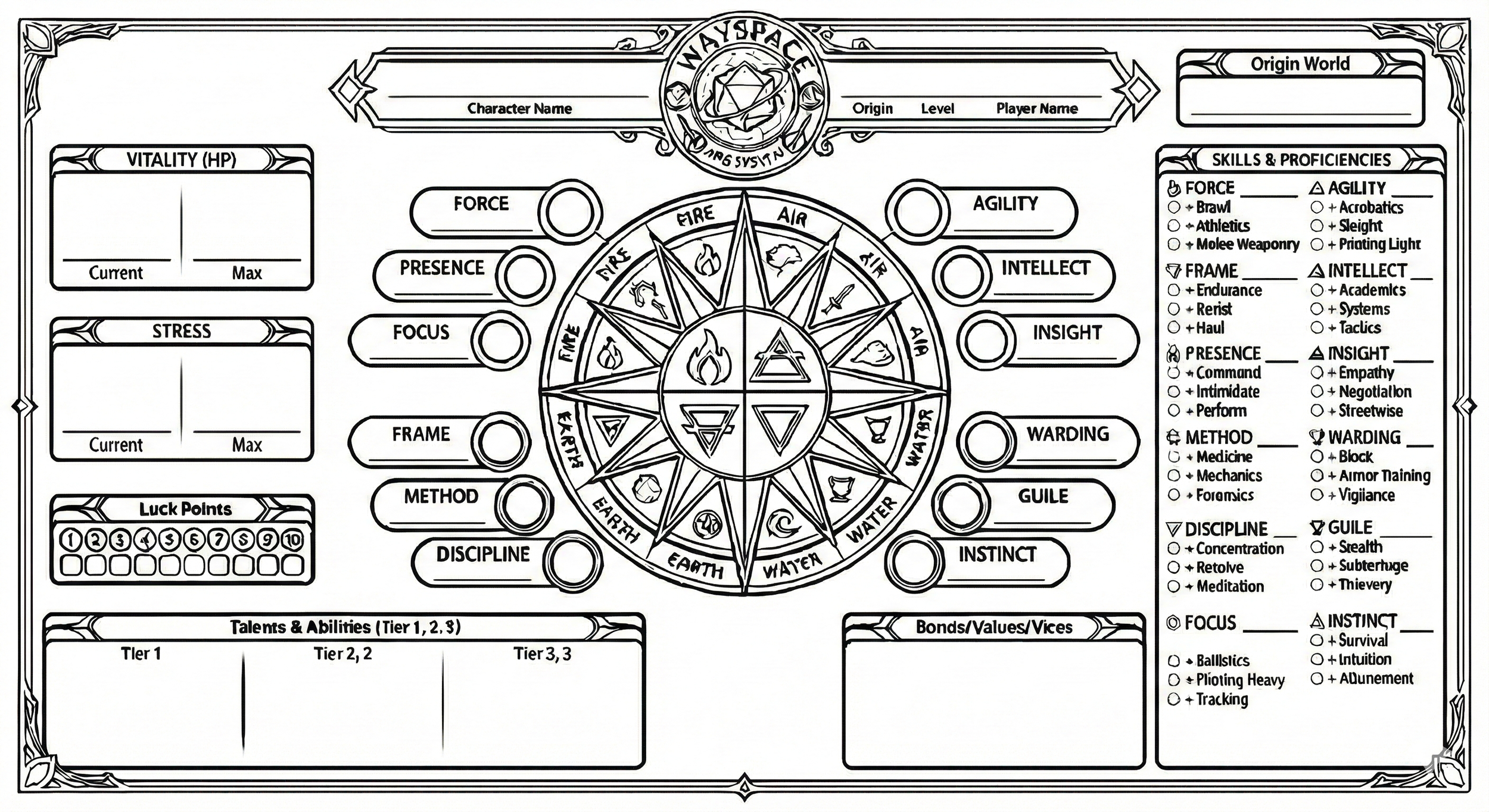
Character Creation
You will assign Attributes. You may take a Defect or two to increase you points.
You will choose a background Origin which adds to two Attributes and gives you an Edge special ability.
You will work out your Vital statistics.
Then you choose a Bond between you and two other players.
You will then create Values and Vices for your character.
You will define your Talents based on your Attribute ratings
You will select a House to belong to and get a special ability from that House.
You can choose an Ascendant patron, ally, enemy, observer. This is wide open to suit your backstory.
Step 1: Assign Attributes
Step One - Attributes
Distribute 12 points amongst the Attributes, placing a maximum of 3 points in any Attribute. Go to Attribute Ratings to see explanations of what each level of point means
In WaySpace, a negative Attribute score represents a specific, mechanical deficiency in a character's makeup.
-1 (The Flaw): A hindrance that makes tasks difficult or inefficient.
-2 (The Liability): A severe disability that completely restricts certain actions or invites danger.
Extra bonus step : the Trade-Off Rule (Min-Maxing)
During Character Creation, you may voluntarily lower an Attribute to gain points to spend elsewhere - improving even an Attribute already at 3.
Take a -1 (Flaw): Gain +1 Point to spend on another Attribute.
Take a -2 (Liability): Gain +2 Points to spend on another Attribute.
Restriction: You may only have a negative score in a maximum of two Attributes. Attributes can only go as low as -2. Thus you either take a Flaw or a Liability, never both
Go to Defects to see the explanations of each Flaw and Liability
An Origin is your character background, where your character started from in life. Choose 2 Attributes from the Primary Attributes listed and give each +1, allowing above maximum 3 start.
Step 2: Choose Origin
-
Archetype: The Soldier, The Mercenary, The Survivor. Motto: "I didn't survive the last war by being slow."
Primary Attributes:
FORCE: For close-quarters combat and physical intimidation.
FOCUS: For firearm discipline, archery, or weapon maintenance.
WARDING: For knowing when to duck and how to wear armor properly.
The Edge: Combat Drill
Mechanic: You treat Reloading, Drawing/Stowing a Weapon, or Standing Up from Prone as Free Actions (limit once per turn). Normally, these are Minor Actions.
Tactical Advantage: This allows the Veteran to switch from a rifle to a knife instantly, or reload and shoot in the same turn without sacrificing movement. They are the most fluid combatants in the game.
Genre Adaptations:
Fantasy: The King’s Guard or a retired sellsword. Focuses on crossbows and shields.
Sci-Fi: A Marine or a Corporate Security Contractor. Focuses on assault rifles and tactical movement.
Modern/Horror: An Ex-Cop or Doomsday Prepper. Focuses on shotguns and barricading doors.
-
Archetype: The Thief, The Outlaw, The Charmer. Motto: "Rules are just suggestions written by people who lack imagination."
Primary Attributes:
GUILE: For stealth, deception, and finding the weak spot.
AGILITY: For acrobatics, escaping bonds, and picking pockets.
INSIGHT: For reading people to avoid a fight (or start one unfairly).
The Edge: Slippery
Mechanic: If you are wearing Light Armor or No Armor, you may use your Guile score instead of Warding to calculate your Defense (AC).
Tactical Advantage: This allows the Scoundrel to dump the Warding stat entirely. They don't block attacks; they just aren't there when the attack lands. It rewards high-stealth builds with high survivability.
Genre Adaptations:
Fantasy: A Cutpurse or Assassin. Uses daggers and shadows.
Sci-Fi: A Smuggler or Blockade Runner. Uses a blaster pistol and a fast ship.
Modern/Horror: A Con Artist or Hacker. Uses social engineering and lockpicks.
-
The Academic
Archetype: The Scholar, The Doctor, The Scientist. Motto: "Knowledge is not power. It's the lever that applies the power."
Primary Attributes:
INTELLECT: For history, technology, and arcane theory.
METHOD: For healing, crafting, and analyzing mechanisms.
DISCIPLINE: For concentration and resisting mental stress.
The Edge: Field Analysis
Mechanic: Once per encounter, you may ask the GM a specific question about an enemy, object, or system. The GM must answer truthfully.
Examples: "Is this creature immune to fire?" "Which wire disarms the bomb?" "Is the Baron mind-controlled?"
Tactical Advantage: This is a "solver" ability. In a system where enemies have specific resistances or weaknesses, the Academic prevents the party from wasting turns using the wrong attacks.
Genre Adaptations:
Fantasy: A Wizard or Alchemist. Focuses on spell scrolls and potions.
Sci-Fi: A Xenobiologist or Engineer. Focuses on alien physiology and warp drives.
Modern/Horror: A Professor or Forensic Examiner. Focuses on occult lore and autopsies.
-
Archetype: The Zealot, The Psionic, The Chosen One. Motto:"My path is clear. Do not stand in the way."
Primary Attributes:
INSTINCT: For sensing the supernatural, luck, and initiative.
PRESENCE: For commanding others and projecting authority.
FRAME: For enduring physical hardship through sheer will.
The Edge: Conviction
Mechanic: You may reroll any failed Saving Throw (Frame, Agility, or Discipline) once per session. You must keep the second result.
Tactical Advantage: Saving throws usually prevent bad things (poison, mind control, fire damage). The Believer is the "safety net" character who rarely succumbs to status effects, making them excellent leaders or designated survivors.
Genre Adaptations:
Fantasy: A Cleric or Paladin. Powered by a god or oath.
Sci-Fi: A Psionicist or Space Monk. Powered by cosmic energy or mental training.
Modern/Horror: A Cultist or Psychic Medium. Powered by eldritch secrets or madness.
-
The Laborer
Archetype: The Worker, The Heavy, The Commoner. Motto: "If it's broken, I fix it. If it's in the way, I move it."
Primary Attributes:
FRAME: For health, lifting, and stamina.
FORCE: For raw power and melee damage.
METHOD: For repairing gear and jury-rigging solutions.
The Edge: Grit
Mechanic: Your Maximum Vitality (HP) is increased by +5 permanently. You also gain +5 Inventory Slots.
Tactical Advantage: In this system, HP is relatively low. A +5 boost is significant at Level 1 (equivalent to a massive Frame score). The extra inventory space allows them to carry heavy weaponry, quest items, or unconscious teammates without penalty. They are the backbone of the group.
Genre Adaptations:
Fantasy: A Blacksmith or Peasant Hero. Wields a hammer or axe.
Sci-Fi: A Ship Mechanic or Asteroid Miner. Wields a wrench or power-loader suit.
Modern/Horror: A Construction Worker or Trucker. Wields a crowbar or tire iron.
-
The Aristocrat
Archetype: The Executive, The Highborn, The Diplomat. Motto: "Everyone has a price. It's usually cheaper than a funeral."
Primary Attributes:
PRESENCE: For negotiation, command, and social dominance.
INTELLECT: For superior education, history, or financial knowledge.
DISCIPLINE: For etiquette, poker face, and navigating bureaucracy.
The Edge: Liquid Assets
Mechanic: You begin the game with 3x the standard starting currency. Additionally, you have Advantage on all rolls made to bribe NPCs or acquire rare equipment.
Tactical Advantage: In a system where equipment provides Armor and Damage, starting with the best gear is a massive combat advantage. The ability to bribe guards effectively allows the party to bypass combat encounters entirely.
Genre Adaptations:
Fantasy: A Noble Scion or Merchant Prince. Starts with plate armor and a horse.
Sci-Fi: A Corp-Exec or Planetary Governor's child. Starts with high-tech gadgets.
Modern/Horror: A Politician or Trust Fund Heir. Starts with a luxury vehicle and security clearance.
-
Archetype: The Ranger, The Scout, The Scavenger. Motto:"The city lies to you. The wild is honest—it just wants to eat you."
Primary Attributes:
FOCUS: For hunting (ranged weapons) and navigation.
FRAME: For enduring exposure to the elements and long marches.
INSTINCT: For sensing weather changes, ambushes, or fresh water.
The Edge: Forager
Mechanic: Whenever you take a Short Rest in a wilderness or ruined environment, you automatically find enough Food and Water for 4 people, or Generic Ammo for 1 weapon. No roll required.
Tactical Advantage: In resource-scarce games (Zombie Apocalypse or Dungeon Delving), this prevents the "death spiral" of running out of supplies. It makes the party self-sufficient and extends how long they can operate without returning to base.
Genre Adaptations:
Fantasy: A Ranger or Druid. Finds berries and game.
Sci-Fi: An Explorer or Colonist. Finds edible flora or power cells.
Modern/Horror: A Doomsday Prepper or Homeless Drifter. Finds canned goods and scrap.
-
The Investigator
Archetype: The Detective, The Inquisitor, The Spy. Motto: "The dead always talk. You just have to know how to listen."
Primary Attributes:
INSIGHT: For reading body language and detecting lies.
METHOD: For forensics, searching rooms, and connecting clues.
GUILE: For tailing suspects and blending into crowds.
The Edge: The Hunch
Mechanic: You gain permanent Advantage on Method checks to search a physical area and Insight checks to discern a lie or hidden motive.
Tactical Advantage: This is a reliability mechanic. Missing a clue or believing a villain's lie can derail an entire adventure. The Investigator ensures the party almost always finds the hidden door, the murder weapon, or the traitor in their midst.
Genre Adaptations:
Fantasy: A Royal Inquisitor or Witch Hunter. Tracks magic residue.
Sci-Fi: A bounty hunter or Blade Runner. Tracks heat signatures and data trails.
Modern/Horror: A Private Investigator or Journalist. Tracks fingerprints and leads.
-
The Performer
Archetype: The Bard, The Rockerboy, The Propagandist. Motto: "All the world's a stage, and I'm the only one who knows the lines."
Primary Attributes:
AGILITY: For dancing, tumbling, and stage fighting.
PRESENCE: For projecting your voice and capturing attention.
GUILE: For acting, disguises, and emotional manipulation.
The Edge: Captivate
Mechanic: As a Main Action, you can perform to distract a target within 30ft. That target suffers Disadvantage on all Attack Rolls made against anyone other than you until the start of your next turn.
Tactical Advantage: This is a "Soft Taunt." It protects your squishy allies (like the Academic or Scoundrel) by forcing the enemy to either attack you (the Performer) or likely miss their attack. It is powerful crowd control without using magic.
Genre Adaptations:
Fantasy: A Minstrel or Jester. Uses a lute or juggling balls.
Sci-Fi: A Holo-Net Star or Media Influencer. Uses drones and light shows.
Cyberpunk: A Rockerboy. Uses an electric guitar and rebellion.
-
The Guardian
Archetype: The Bodyguard, The Sentinel, The Bouncer. Motto: "Get behind me."
Primary Attributes:
WARDING: For maximum Armor Class and blocking.
FRAME: For high Hit Points (Vitality).
DISCIPLINE: For resisting fear effects and holding the line.
The Edge: Intervention
Mechanic: If an ally within 5ft of you is hit by an attack, you can use your Reaction to swap places with them. You take the damage of the attack instead of the ally.
Tactical Advantage: This is the ultimate "Tank" ability. It guarantees that the glass cannon (who might die in one hit) survives, while the Guardian (who has high AC and HP) takes the bruise. It allows for aggressive positioning by the rest of the team.
Genre Adaptations:
Fantasy: A Knight or Shield-Bearer. Uses a tower shield.
Sci-Fi: A Combat Droid or Power-Armored Trooper. Uses energy shields.
Modern/Horror: A Secret Service Agent or Riot Cop. Uses a Kevlar vest and body mass.
-
The Ace
Archetype: The Pilot, The Rider, The Driver. Motto: "Speed is life. You stop, you die."
Primary Attributes:
FOCUS: For operating vehicles/mounts and trajectory.
AGILITY: For reaction time and maneuvering.
INTELLECT: For understanding navigation systems and engine specs.
The Edge: Born to Ride
Mechanic: While piloting a vehicle (car, starship, mecha) or riding a mount (horse, griffon), you ignore penalties for "Difficult Terrain" or "Complex Maneuvers." Additionally, your vehicle/mount gains +2 Defense (AC) while you are controlling it.
Tactical Advantage: In vehicle-heavy genres, this makes the Ace the designated driver who keeps the party alive during chases. In fantasy, it makes a mounted knight exceptionally hard to hit.
Genre Adaptations:
Fantasy: A Cavalry Knight or Pegasus Rider.
Sci-Fi: A Starfighter Pilot or Mech Jockey.
Modern: A Getaway Driver or F1 Racer.
-
The Physician
Archetype: The Combat Medic, The Healer, The Sawbones. Motto: "I can fix that, but it's going to hurt."
Primary Attributes:
METHOD: For surgery, first aid, and diagnosis.
INSIGHT: For bedside manner and calming patients.
DISCIPLINE: For working under pressure and steady hands.
The Edge: Triage
Mechanic: When you use an Action to heal a target (using Method or a medical kit), you add your Method Score to the amount healed. Additionally, you can stabilize a dying ally as a Bonus Action rather than a Main Action.
Tactical Advantage: Healing in this system is often slow or resource-intensive. The Physician makes every healing action significantly more efficient, keeping the tank in the fight longer.
Genre Adaptations:
Fantasy: A Cleric (Non-magical) or Herbalist.
Sci-Fi: A Bio-Tech or Ship’s Doctor.
Modern: A Paramedic or Field Surgeon.
-
The Marksman
Archetype: The Sniper, The Archer, The Gunman. Motto: "One shot. One clean ledger."
Primary Attributes:
FOCUS: For aim and range.
GUILE: For camouflage and finding a sniper nest.
DISCIPLINE: For patience and breath control.
The Edge: Steady Aim
Mechanic: If you do not move during your turn, you gain Advantage on your first Ranged Attack roll of that turn.
Tactical Advantage: This rewards a stationary playstyle. While the Ace and Scoundrel move around, the Marksman finds high ground and delivers consistent, high-accuracy damage.
Genre Adaptations:
Fantasy: An Elven Archer or Crossbowman.
Sci-Fi: A Recon Sniper with a railgun.
Western: A Sharpshooter with a rifle.
-
The Reaver
Archetype: The Berserker, The Gladiator, The Psycho. Motto:"Pain is just the fuel that starts the engine."
Primary Attributes:
FORCE: For brutal melee damage.
FRAME: For surviving injuries.
INSTINCT For channeling rage and reflex.
The Edge: Bloodlust
Mechanic: When you reduce an enemy to 0 HP, you immediately gain Temporary HP equal to your Force Score + Level.
Tactical Advantage: This character thrives in group combat. As long as they are killing "trash mobs" (minions), they keep generating their own health buffer, allowing them to stay on the front lines without needing constant healing.
Genre Adaptations:
Fantasy: A Barbarian or Orc Raider.
Sci-Fi: A Cyber-Psycho or Mutant.
Modern/Horror: A Chainsaw Maniac.
-
The Commander
Archetype: The Warlord, The Officer, The Tactician. Motto:"Eyes on me! Fire on my mark!"
Primary Attributes:
PRESENCE: For shouting orders and morale.
INTELLECT: For strategy and logistics.
WARDING: For surviving on the front lines.
The Edge: Direct Order
Mechanic: You can forgo your Main Action to command an ally within 30ft. That ally immediately uses their Reaction to make one Basic Attack or Move up to their speed.
Tactical Advantage: This allows the Commander to give their action to the party member who needs it most (e.g., letting the Reaver hit again, or letting the Physician move to a dying ally). It maximizes action economy efficiency.
Genre Adaptations:
Fantasy: A Warlord or Battlemaster.
Sci-Fi: A Squad Leader or Fleet Captain.
Modern: A SWAT Team Leader.
-
The Handler
Archetype: The Beastmaster, The Drone Operator, The Summoner. Motto:"I wouldn't make him angry if I were you."
Primary Attributes:
INSTINCT: For connecting with the companion.
INTELLECT: For programming (Sci-Fi) or training commands.
FOCUS: For coordinating attacks.
The Edge: Loyal Companion
Mechanic: You start with a Companion (Wolf, Drone, Robot, Squire). It has 10 HP and acts on your Initiative. You can use your Bonus Action to command it to Attack (d20 + Your Level to hit, d6 damage).
Tactical Advantage: Action economy superiority. You essentially get two turns (one big, one small) and a second body on the field to block doorways or flank enemies.
Genre Adaptations:
Fantasy: A Ranger with a wolf or falcon.
Sci-Fi: A Rigger with a combat drone.
Modern: A K-9 Unit Officer.
-
The Engineer
Archetype: The Techie, The Blacksmith, The Hacker. Motto: "I can make it work. Just don't ask about the warranty."
Primary Attributes:
METHOD: For repairs and construction.
INTELLECT: For schematics and code.
AGILITY: For fine manipulation of tools.
The Edge: Overclock
Mechanic: During a Short Rest, you can "tune" one weapon or piece of armor. For the next encounter, that item gains a +1 bonus (Attack/Damage for weapons, AC for armor). You can only have one tuned item active at a time.
Tactical Advantage: A flexible buffer. If the tank is taking too much damage, tune their armor. If the boss has high defense, tune the sniper's rifle.
Genre Adaptations:
Fantasy: A Runesmith or Artificer.
Sci-Fi: A Ship Engineer.
Cyberpunk: A Ripperdoc.
-
The Duelist
Archetype: The Fencer, The Gunslinger, The Samurai. Motto: "It's not about strength. It's about timing."
Primary Attributes:
AGILITY: For footwork and speed.
FORCE: For the striking blow.
INSIGHT: For reading the opponent's stance.
The Edge: Riposte
Mechanic: When an enemy makes a melee attack against you and misses, you may use your Reaction to make an immediate Melee Attack against them.
Tactical Advantage: The Duelist punishes enemies for failure. This makes them excellent at holding off single powerful enemies. The higher their Defense (Warding/Agility), the more free attacks they generate.
Genre Adaptations:
Fantasy: A Swashbuckler or Blade-Dancer.
Sci-Fi: A Jedi-archetype or Beam-Saber user.
Western: A Quick-Draw Artist (using Focus instead of Force).
-
The Trader
Archetype: The Merchant, The Smuggler, The Fixer. Motto: "Everything is for sale. Even victory."
Primary Attributes:
INSIGHT: For appraisal and negotiation.
PRESENCE: For haggling and contacts.
METHOD: For evaluating goods quality.
The Edge: Black Market Contacts
Mechanic: Once per session, in any civilized area, you can automatically procure a specific Restricted Item (explosives, poison, rare magic component) without needing a roll, or sell "hot" items for full value.
Tactical Advantage: Logistics win wars. The Trader ensures the party always has the specific tool needed for the job, or the cash flow to upgrade their gear faster than the difficulty curve.
Genre Adaptations:
Fantasy: A Caravan Master.
Sci-Fi: A Quartermaster or Arms Dealer.
Modern: A Fence or Mob Accountant.
-
The Saboteur
Archetype: The Demolitionist, The Sapper, The Anarchist. Motto: "Some men want to watch the world burn. I just light the match."
Primary Attributes:
GUILE: For planting charges unseen.
INTELLECT: For chemical mixing/electronics.
METHOD: For disarming (or arming) mechanisms.
The Edge: Demolitions
Mechanic: You deal Double Damage to inanimate objects, structures, and vehicles. Additionally, you can craft an improvised explosive (Grenade equivalent: 2d6 damage, 10ft radius) during a Short Rest if you have supplies.
Tactical Advantage: Battlefield control. The Saboteur destroys cover, blows open locked doors, destroys the enemy getaway car, or brings the ceiling down on the boss.
Genre Adaptations:
Fantasy: An Alchemist with fire-flasks.
Sci-Fi: A Heavy Weapons Guy with C4.
Modern: A Bomb Disposal Expert gone rogue.
Step 3: Vitals
Calculate Hit Points (HP) aka Vitality:
20 + Frame divided by 2 round down
If your Vitality hits 0, you are dying.
Calculate Stress Points (SP):
10 + Discipline
If your Stress hits 0, you panic, faint, or go insane
Speed is 10m per round, can be modified by Agility Talents
Initiative aka Reaction: d20 + Instinct
Calculate Defence aka Armour Class (AC):
12 + Warding + Armour worn bonus
Calculate Luck Points:
1+ Instinct score divided by 2 (rounded down)
Step 4: Choose a Bond
During character creation, after choosing Origins, the group must define their Bonds. Players do not exist in a vacuum; they are linked. Each player must form a Bond with the player to their Left and the player to their Right. Choose a Bond based on the Element of your highest Attribute. You can have two different Bonds or the same Bond to both characters.
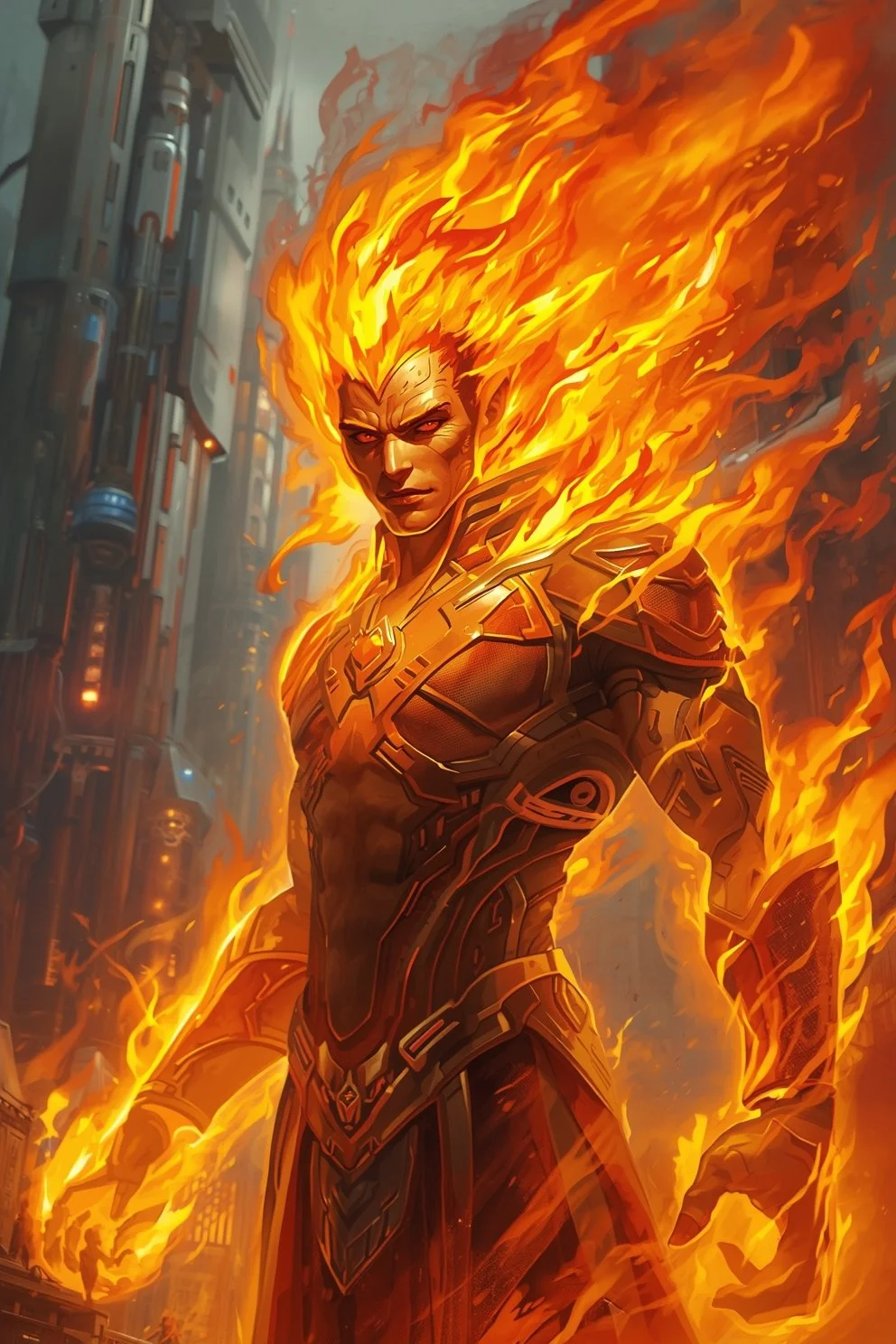
Fire
The Rivalry: "I need to prove I am better/stronger/faster than you."
Benefit: When you both attack or socially engage with the same enemy in a round, you both gain +1 to Attack.
The Debt: "You saved my life in a firefight. I owe you."
Benefit: You can use your instant reaction to take damage intended for this ally (once per encounter).
Force, Presence, Focus
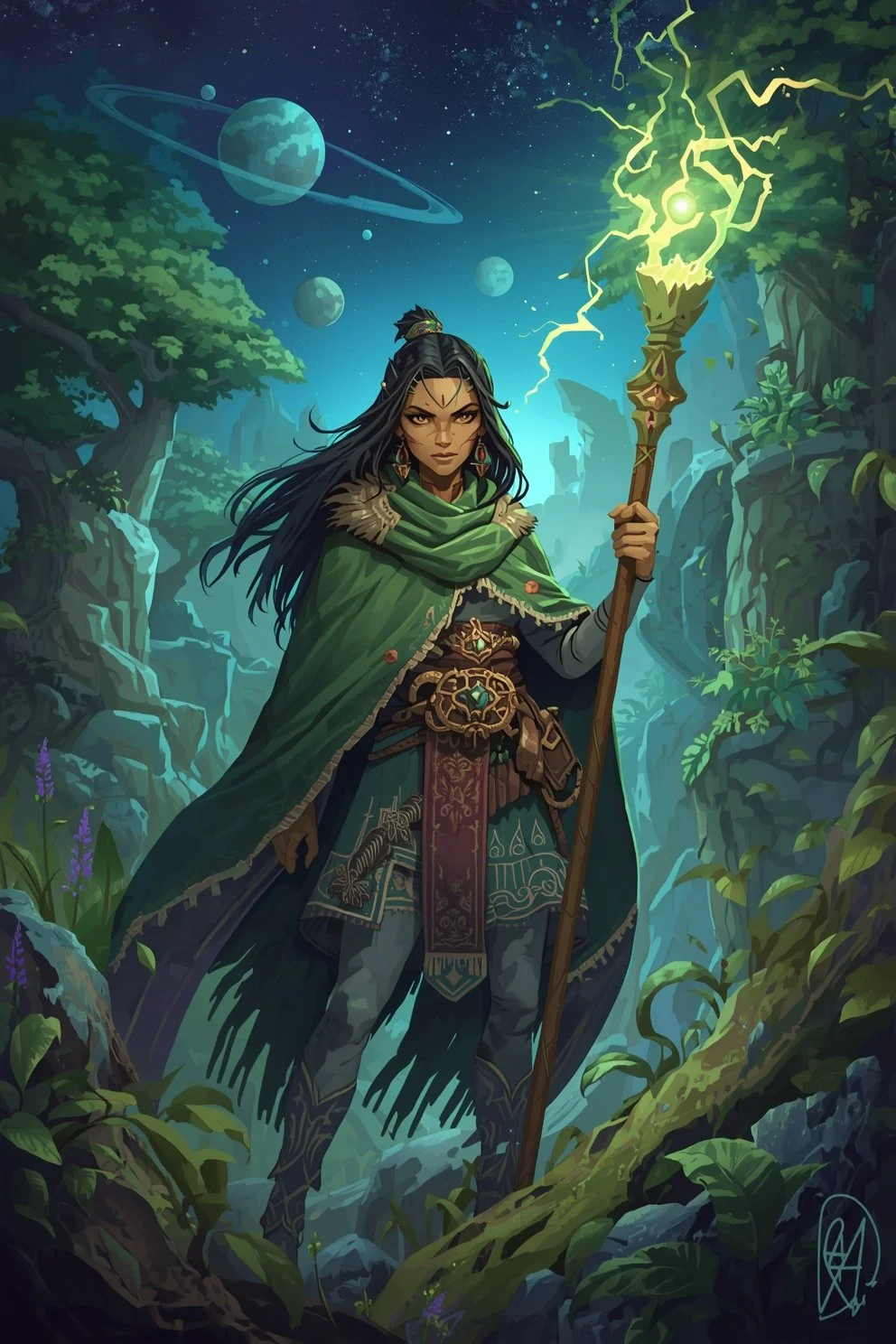
Earth
The Anchor: "You are the only one who keeps me calm."
Benefit: If you are adjacent to this ally, you have Advantage on Discipline checks (Fear/Stress).
The Shared Past: "We grew up together / Served in the same unit."
Benefit: You can share Inventory instantly (as a Free Action) regardless of distance, provided you have line of sight (tossing items perfectly)
Frame, Method, Discipline

Agility, Intellect, Insight
air
The Secret: "I know something about you that no one else does."
Benefit: Once per session, you can communicate a complex plan to this ally silently (telepathically or via code).
The Brain & Brawn: "I plan it, you execute it."
Benefit: If you use the Help Action on this ally, they gain +1d6 to the roll instead of just Advantage.

Warding, Guile, Instinct
water
The Sibling: "We are family (by blood or choice). If you bleed, I bleed."
Benefit: If this ally is Downed (0 HP), you gain Advantage on all rolls until they are stabilized.
The Bad Influence: "We get into trouble together."
Benefit: If you both fail a Stealth (Guile) check, you can spend 1 Luck Point to turn both failures into successes.
Step 5: Choose Values and Vices
Values and Vices (Roleplay XP)
To encourage roleplay during the game, every character chooses at least one Value and one Vice.
The Value and Vice can effectively be a modifier to some rolls or checks where appropriate.
The Trigger: Once per session, if you play to your Value or Vice in a way that is suboptimal or risky, you gain 1 Progression Point (PP) immediately.
Note: This is distinct from Luck Points. Luck helps you survive now. Progression Points help you level up later. This incentivizes character growth over winning.
Sample Values:
Justice: You refuse to let a guilty NPC go, even if it means fighting the city guard.
Loyalty: You run back into a burning building to save a friend's gear.
Truth: You refuse to lie to the Guard Captain, even though lying would be easier.
Sample Vices:
Greed: You trigger a trap because you tried to pry a gem loose during combat.
Wrath: You kill a surrendering enemy because they insulted you.
Curiosity: You press the red button. You always press the red button.
Step 6: Talents
Each Attribute at +2 gives you a Talent.
You receive an additional Talent at +4 in an attribute.
You note the abilities you now have from your Talents before going on to Proficiencies and Powers. All the Talents are listed here under Talents
Step 7: Skills and Powers
